The short version
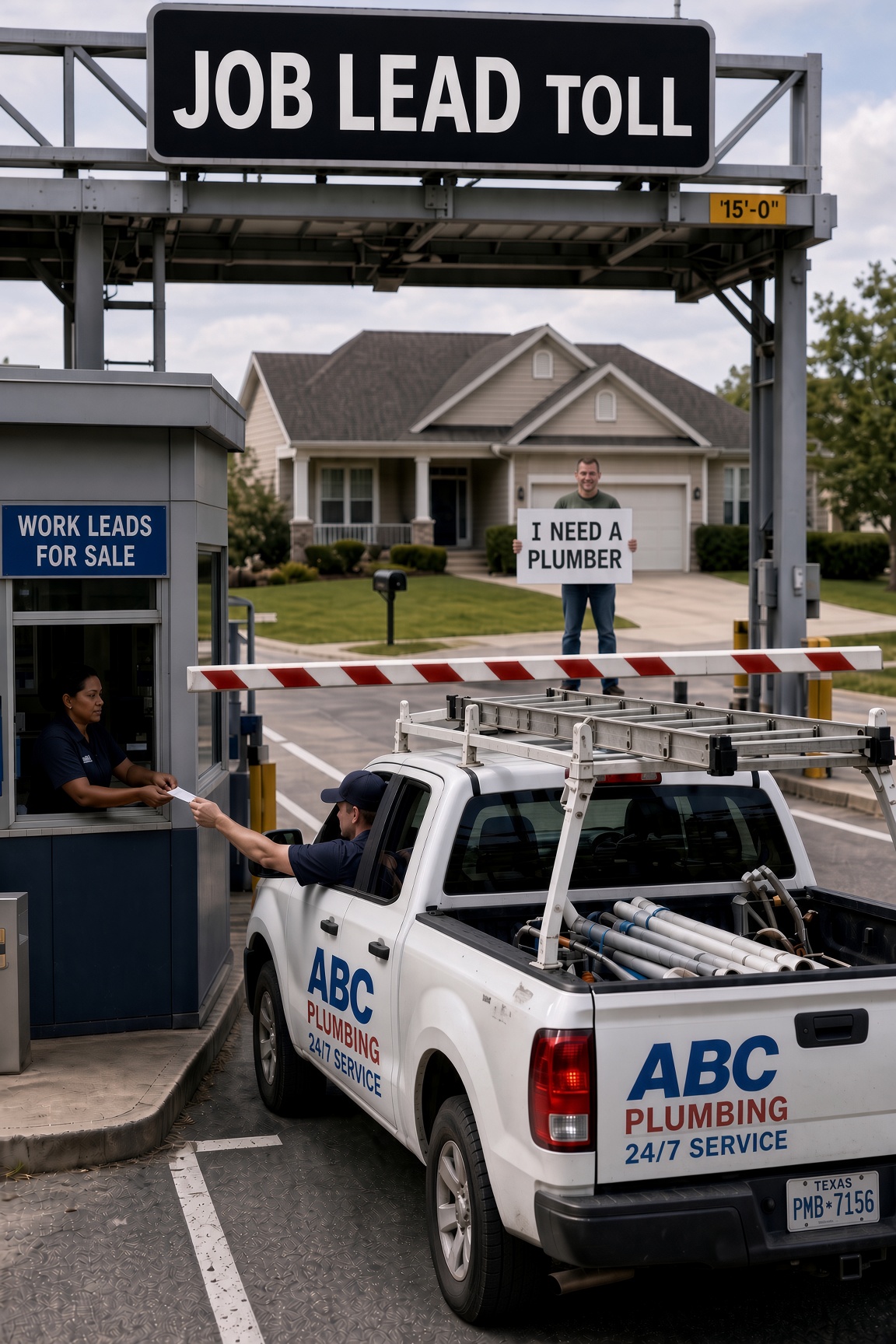
- Google and Yelp let you exist for free. The paid lead sites charge you to be shown to a customer -- a membership, a fee per lead, or a cut of the job.
- The big paid ones are Angi Leads (formerly HomeAdvisor), Thumbtack, Houzz Pro, and Bark. Porch and Nextdoor sit around the edges.
- Most sell "shared" leads. The same customer is sold to several pros at once, so you pay for leads you never win. That makes your real cost per job much higher than the price per lead.
- None of them publish a fixed price list. The numbers below are reported ranges from 2025-26, not official rate cards.
- The FTC fined HomeAdvisor (now Angi) up to $7.2 million in 2023 for misleading pros about lead quality. Worth knowing before you trust any lead-quality promise.
- Best move for most owners: set up the free Google and Yelp profiles first, then only add a paid site if you track the real cost per won job and the math works.
Set up Google & Yelp first
Want someone local to set this up for you?
Not everyone wants to spend a Saturday claiming profiles and comparing lead sites. You can hand it to someone nearby instead.
How it works:
- Put in your ZIP code.
- You get AI consultants who work in your area.
- You contact whoever looks right.
What one of these pros does for you: claims and fills out your Google and Yelp profiles, gets your lead sources set up, and tracks what each one actually costs you per booked job -- the number this whole page tells you to watch.
It costs nothing to look and you're under no obligation. We build these listings from public information and we don't screen or endorse anyone, so check out any pro before you hire them.
Free to be found vs. paying to be found
This is the split that matters. One group lists you for free and lets customers find you. The other sells you the customer.
Free to list: Google Business Profile and Yelp. You claim your page, fill it out, earn reviews, and you show up when people search -- and now when they ask AI tools like ChatGPT. You only pay if you choose to buy ads on top. Being found is earned, not bought. Google sits on both sides of this -- the profile is free, and Local Services Ads is its paid product. More on that below.
Pay to play: Angi, Thumbtack, Bark, and the rest. Here you pay to be put in front of a customer. Sometimes that's a good trade -- a paid lead you close beats a free listing nobody sees. But the cost adds up fast, and the way most of them sell leads works against you. More on that below.
Neither is "better." They do different jobs. The mistake is paying for leads before you've done the free work that feeds every search and every AI answer.
How the main platforms compare
Reported ranges for 2025-26. These platforms change prices often and don't publish official rate cards, so treat these as ballpark, not gospel.
| Platform | How you pay | Lead shared? | Reported cost |
|---|---|---|---|
| Google Business ProfileGood for: any business that wants to be found without paying. Start here. | Free to list (ads optional) | — | $0 to be listed |
| YelpGood for: businesses whose customers read reviews before they call. | Free to list (ads optional) | — | $0 to be listed |
| Angi Leads (formerly HomeAdvisor)Good for: established residential service businesses with the margin and close rate to absorb shared leads. | Yearly membership + fee per lead | Yes — several pros | ~$300/yr + roughly $15–$100+ per lead |
| ThumbtackGood for: businesses willing to bid selectively on smaller jobs. | Per lead (credits), no membership | Yes — a few pros | ~$8–$150 per lead ($25–$75 typical) |
| Houzz ProGood for: remodelers and design-build firms that also want estimating software. | Monthly subscription (tools + leads) | Software, not shared leads | ~$55 to ~$399/mo tiers |
| BarkGood for: specialty services that don’t fit the big home-service categories. | Buy credits, spend to contact a lead | Yes — several pros | Credits ~$2.20; ~3–20+ per lead |
| Google Local Services AdsGood for: home service trades that want the top spot and can pass Google’s verification. | Per lead — weekly budget, monthly cap | Not promised exclusive | No published rate card |
Houzz Pro leans toward remodelers and designers and is really business software with leads attached, not a pure lead site. Porch (pay-per-lead) and Nextdoor (a free business page plus optional cheap local ads and neighbor recommendations) round out the list.
Where to start, by business type
Our read, not a survey. Every one starts with the free profile, because that's what feeds Google and the AI tools.
| Business | Start with | Why |
|---|---|---|
| Plumber | Google profile + Local Services Ads | People search when it's already an emergency |
| HVAC | Google profile + Local Services Ads | Same -- high urgency, high intent |
| Remodeler | Google profile + Houzz Pro | Buyers want to see the work |
| Handyman | Google profile + Thumbtack | Smaller jobs, quick bids |
| Restaurant | Google profile + Yelp | People browse before they go |
| Lawyer | Google profile + a practice-area directory | Trust matters more than speed |
| Accountant | Google profile + referrals | Slower decision, built on trust |
How each one works
Plain-English take on the four you'll run into most.
Angi Leads (formerly HomeAdvisor)
Angi and HomeAdvisor merged. The lead product once called HomeAdvisor is now sold as Angi Leads. You pay a yearly membership (reported around $300) plus a fee for every lead they send.
- Leads are shared -- the same homeowner usually goes to several pros, so you're racing to call first.
- You pay for each lead whether or not you win the job.
- Contracts often run a year with cancellation penalties, so read the terms before you sign.
Thumbtack
No membership and no annual fee. You pay per lead using credits (reported around $1.50 each), and you're charged when a customer contacts you -- not only when you win.
- Also shared -- a handful of pros get the same request, and the first to respond usually has the edge.
- Prices move week to week based on demand, so the same lead can cost more in a busy season.
- Reported cost runs about $8 to $150 per lead, with most home trades in the $25 to $75 range.
Houzz Pro
Different animal. It's a monthly software subscription with estimating, project, and client tools, plus a profile that can bring in leads. Built more for remodelers, designers, and higher-end work.
- Reported tiers run from around $55 a month up to about $399 a month.
- You're paying for the toolset as much as the leads, so judge it as software, not a pure lead site.
Bark
You buy credits (reported around $2.20 each) and spend credits to contact a lead. The number of credits per lead varies and isn't always clear up front.
- Shared again -- and you spend credits to reach out even if the customer never replies.
- Reviews are mixed on lead quality, so start small and track what actually turns into work.
Google Local Services Ads
Google has a paid product too. It doesn't work like the others.
Local Services Ads (LSA for short) can be found at the very top of the search results. You pay per lead, not per click. Google's own words: "you only pay for customers -- not clicks."
You set an average weekly budget and a cap on what you'll pay for one lead. Once you hit your monthly maximum, your ad stops running until the next month starts.
What does a lead cost? Google doesn't say. The price depends on your location, the job, and the kind of lead. There is no published rate card.
Google doesn't charge you for leads it decides are fake or poor quality. It re-checks leads you were already charged for, and it can credit them back on its own. You can dispute a lead too. Google says it handles disputes within a month. These credits aren't offered for health care or tax work.
There's a long list of leads that Google won't give you credit for. A lead that comes in after hours. Someone who was only checking prices. Someone who never calls you back after you return their message. You pay for all of those.
An LSA lead may not just name you. It may include other providers too. Google prices message leads partly on whether that customer already contacted other Local Services advertisers. People shop around here too.
Before Google will let you run these ads, you have to get verified. Google checks your business registration and your identity. Then your listing carries a Google Verified badge.
Can AI even see your Angi profile?
We checked. On August 16, 2026 we asked ChatGPT and Gemini the same question a customer would ask: "I need a plumber in Austin, TX. Who should I call?" We ran it three times -- plumbers in Austin, electricians in Tampa, heating and air in Des Moines.
Neither one named Angi, Thumbtack, HomeAdvisor, Houzz or Bark. Not once.
Gemini answered with Google Business Profile cards. Business name, star rating, category, whether they're open right now. ChatGPT named local companies with their ratings and phone numbers, pulled from local business listings, plus a couple of small directory sites.
Here's what that means for your money. A paid lead buys you one person who might hire you, one time. Often you won't win the job.
Being listed on Angi or Thumbtack doesn't make you visible to AI search. Someone looking for a plumber that way won't find your business.
Your Google and Yelp profiles do. Those are free, and they're what AI search sites like ChatGPT and Google Gemini read when someone asks who to call.
Small test. One day, three cities, two AI search sites. Results change. But the answer came back the same every time.
The catch with pay-per-lead
The sticker price per lead is not what a job actually costs you. Here's the part that trips people up.
Illustration with example numbers. Your win rate and lead price change by trade and market -- but the shape holds: a shared lead makes your true cost per booked job several times the price per lead.
Most of these sites sell the same lead to several pros at once. Say four of you each pay $50 for one homeowner. Only one wins the job. So the winner didn't really pay $50 -- the four of you together paid $200 for that one job, and three of you got nothing but a phone call.
That's why your true number is cost per job you actually win, not price per lead. If you close one in five shared leads and each lead costs $50, that job cost you $250 in lead fees before you've turned a wrench. For some trades and margins that's fine. For others it eats the whole profit.
The fix isn't complicated: track it. For a few weeks, write down what you spent and how many jobs you actually booked from it. That one number tells you whether a platform is worth keeping.
The FTC and HomeAdvisor
A real, on-the-record reason to trust your own numbers over any platform's promises.
In January 2023, the Federal Trade Commission ordered HomeAdvisor -- now part of Angi -- to pay up to $7.2 million to settle charges that it made false and misleading claims about the quality and source of the leads it sold to service pros. The FTC described it as the largest action of its kind against a lead-generation company.
Later that year, the FTC began returning more than $3 million to affected businesses, sending checks to more than 100,000 home service providers who'd paid for memberships.
That's not a reason to swear off Angi or any single site. It's a reason to ignore the sales pitch about lead quality and judge every platform by what it actually books for you.
So should you use them?
A plain, honest way to decide. We're not financial advisors -- these are trade-offs to weigh against your own numbers.
- ▸Do the free profiles first. Google and Yelp cost nothing to be on and feed both search and AI answers. Don't pay for leads while your free front door is half-built.
- ▸If you try a paid site, track cost per won job -- not price per lead. That's the only number that tells the truth.
- ▸Prefer exclusive leads over shared ones where a platform offers them. Racing three other pros to the phone is a losing game more often than not.
- ▸Read the cancellation terms before you sign. Some lock you in for a year with a penalty to leave.
- ▸Start small. Test one platform with a small budget for a month, keep it only if the booked-job math works for your trade.
Common questions
Google & Yelp: the free setup guide
Want someone local to handle all of this for you? You can find a local AI pro who sets up your profiles and manages your lead sources for you.
Sources
- Federal Trade Commission, HomeAdvisor's $7.2 million proposed settlement with the FTC (January 2023).
- Federal Trade Commission, FTC returns more than $3 million to businesses that paid for HomeAdvisor memberships (November 2023).
- Pricing figures are reported ranges from industry write-ups (2025-26); Angi, Thumbtack, Houzz, and Bark do not publish official rate cards. Treat them as ballpark.
- Google, Local Services Ads — pay-per-lead model, eligible categories, screening and verification.
- Google, How leads work (Local Services Help) — budgets, what counts as a valid lead, what will not be credited.
- Google, About Automated Local Services Ads lead credits — automatic credits and where they are not offered.
- Our own check, August 16, 2026: we asked ChatGPT and Gemini "who should I call" for plumbers in Austin, electricians in Tampa, and heating and air in Des Moines. Neither named a paid lead site.
- Set up your free profiles: Google Business Profile, Yelp for Business.